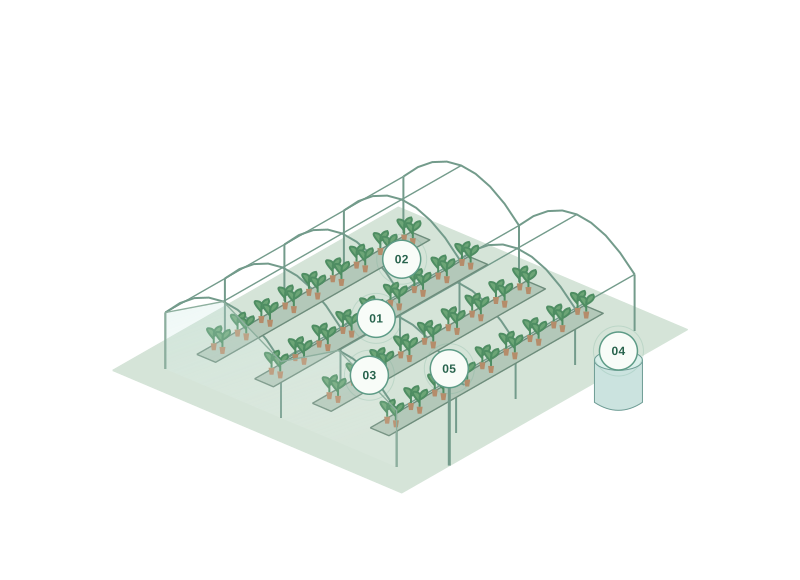
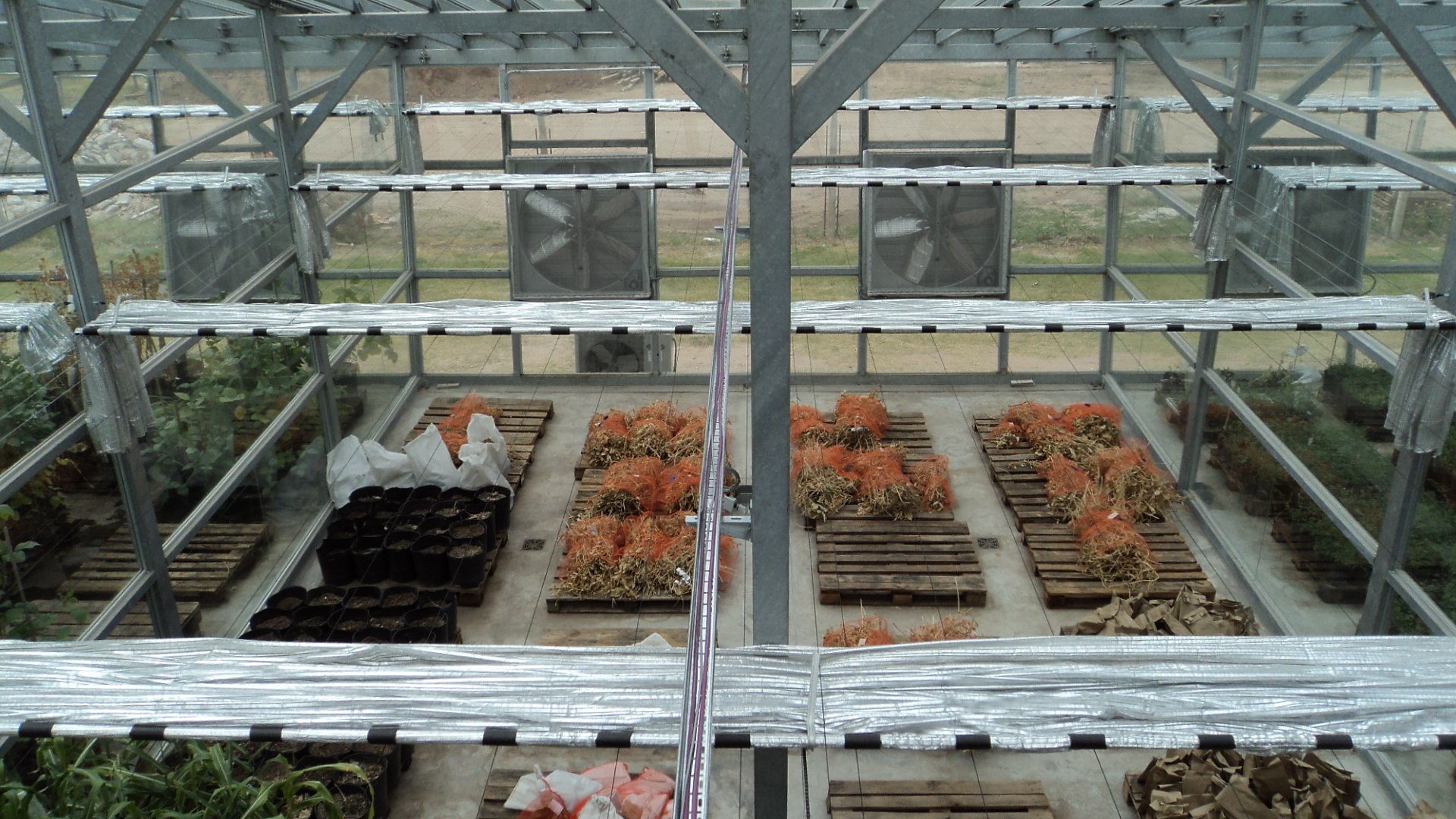
We design and integrate irrigation systems for your crop, substrate and facility conditions, from water distribution to nutrient delivery and management automation.
Loading 3D view…
Better decisions. More value in every cycle.
How this equipment supports everyday crop management.
Water where and when needed
Adjust irrigation using soil or substrate readings to follow crop demand and review volumes and frequency.
More consistent nutrition
Coordinate dosing, mixing and EC and pH readings to prepare a nutrient solution aligned with the management program.
Fewer blind adjustments
Readings and alerts help identify deviations before repeating irrigation or changing the mixture, with management traceability in Gaia.
Uniform distribution for more even growth.
Water volume matters, and so does how it reaches each plant. Uneven distribution can cause excesses and shortages within the same sector, even with identical irrigation times.
We size networks, sectors and emitters for crop needs and greenhouse characteristics.
- Application uniformity. Distribute water at suitable flow rates and pressures.
- Sector management. Adapt irrigation to crops, stages or areas with different needs.
- Better use of water. Adjust applications to reduce excess water and unnecessary drainage.
Adapt nutrient supply to each crop stage.
Fertigation supplies nutrients through irrigation water and allows their delivery to change as crops develop.
We define fertiliser preparation and injection for water quality, the nutrition programme and facility scale. EC and pH readings help check the solution and guide adjustments. Dosing and its level of automation are defined for each project.
Reverse osmosis: prepare water before adding nutrients.
When water analysis indicates excessive dissolved salts, we assess reverse osmosis equipment to reduce that load before preparing the nutrient solution. Treatment depends on source-water quality and crop requirements.
We integrate the unit with pretreatment, treated-water storage and fertigation. Production flow and storage are sized for facility demand, considering energy consumption, filter and membrane maintenance, and concentrate management.
- A more controlled starting point. Lower-salinity water for preparing nutrient solutions according to the technical programme.
- Properly sized treatment. Membranes, pretreatment and capacity selected from water analysis and irrigation volume.
- Fertigation integration. Conductivity measurement, storage and blending or dosing according to project design.
Reverse osmosis is not required for every facility. We first assess available water and management alternatives to define suitable treatment.
Irrigate according to what happens in the crop.
Water needs change with radiation, temperature, humidity and plant development. Fixed schedules may need adjustments between seasons and even within a single day.
Sinthesis technology can combine schedules and sensor data to execute rules defined by your technical team.
For example: enable a cycle within a time window when substrate moisture falls below a defined threshold, with a different rule in the afternoon.
Available variables and automatic actions depend on each facility’s sensors, equipment and configuration. Explore monitoring options.
Good irrigation starts before opening the valve.
The water source, filtration, pressure and maintenance affect system operation and uniformity. We assess the whole installation to define an operable, maintainable solution:
- Water availability and quality.
- Crop, substrate and container type.
- Area and number of sectors.
- Flow rates, pressure and filtration.
- Fertiliser injection.
- Required measurements and automation.
Integrate irrigation with greenhouse management.
Irrigation, ventilation, heating and lighting affect the same crop. Coordinating them helps adapt water applications to environmental conditions and production or research programmes.
CiberAgro handles engineering and facility integration. Sinthesis provides measurement and control tools to automate the agreed processes. Explore integrated control with Gaia.
Want to automate crop irrigation and nutrition?
Combine schedules and substrate data with water management and dosing, according to installed sensors and equipment.
Automatic functions depend on the sensors, actuators and configuration of each project.
Explore integrated control with Gaia ↗Tell us what you grow and how you irrigate today.
We can help define a new installation or assess improvements to your current system. Share the location, area, crop and what you need to solve.
Frequently asked questions
Does it suit soil and hydroponics?
Systems can be designed for soil, substrates or hydroponics. Emitters, water management and interpretation of readings differ.
How does it decide when to irrigate?
Substrate moisture, schedules and crop conditions can be combined. Thresholds, duration and priorities are agreed during commissioning.
Does EC measure each nutrient?
No. It measures electrical conductivity as a reference for overall salt concentration. Recipes require water analysis and agronomic criteria.
Can the solution be reused?
Recirculating systems can recover drainage. Filtration, hygiene, water quality and solution renewal must be addressed in the project.
What maintenance is needed?
Clean filters and tanks; check emitters, dosing equipment, pressure and flow; calibrate EC, pH and moisture probes.
When should reverse osmosis be included?
When water analysis and crop requirements justify reducing dissolved salts before nutrient-solution preparation. Flow, pretreatment, storage, maintenance and concentrate management are assessed. Not every facility needs it.