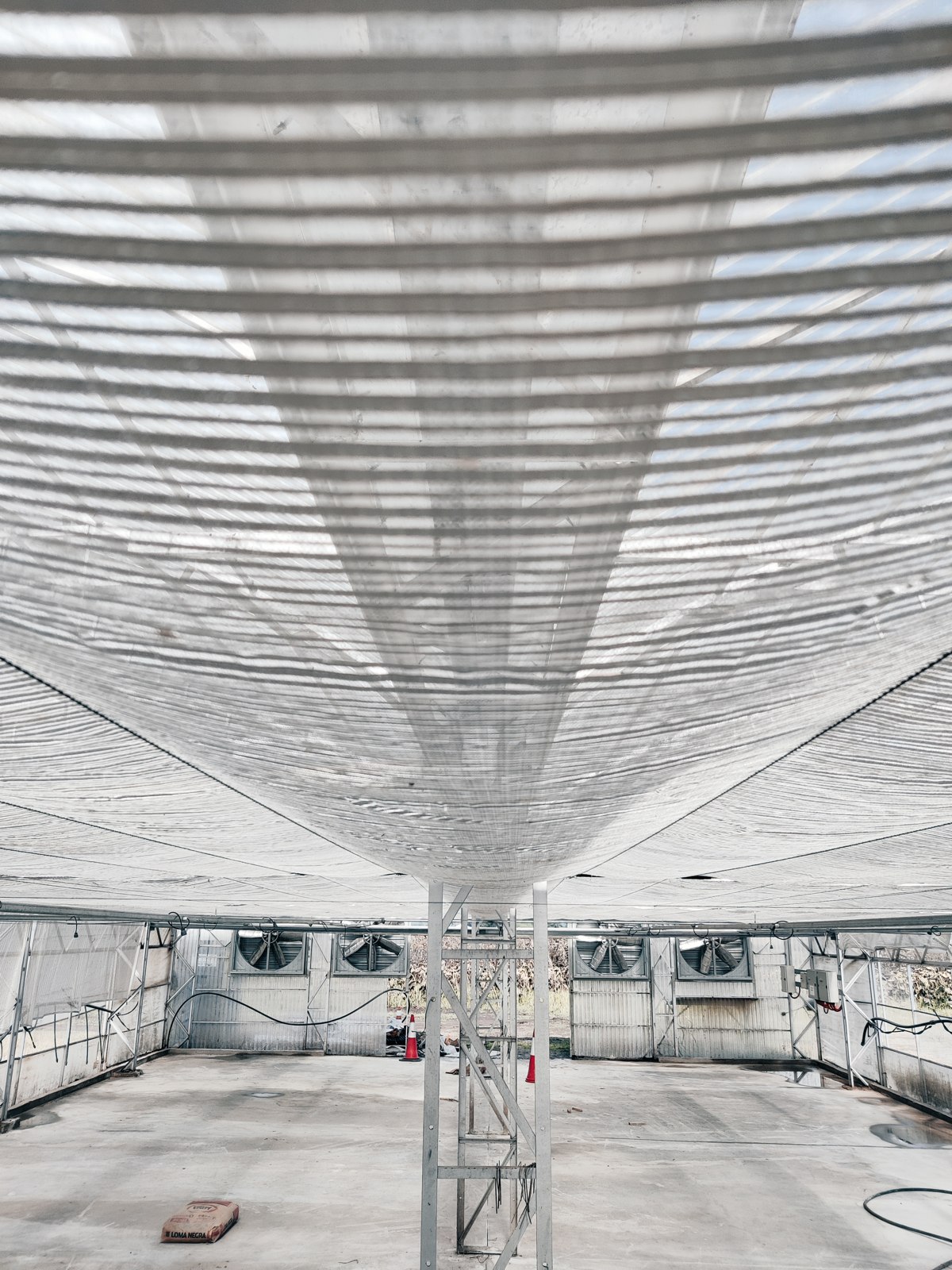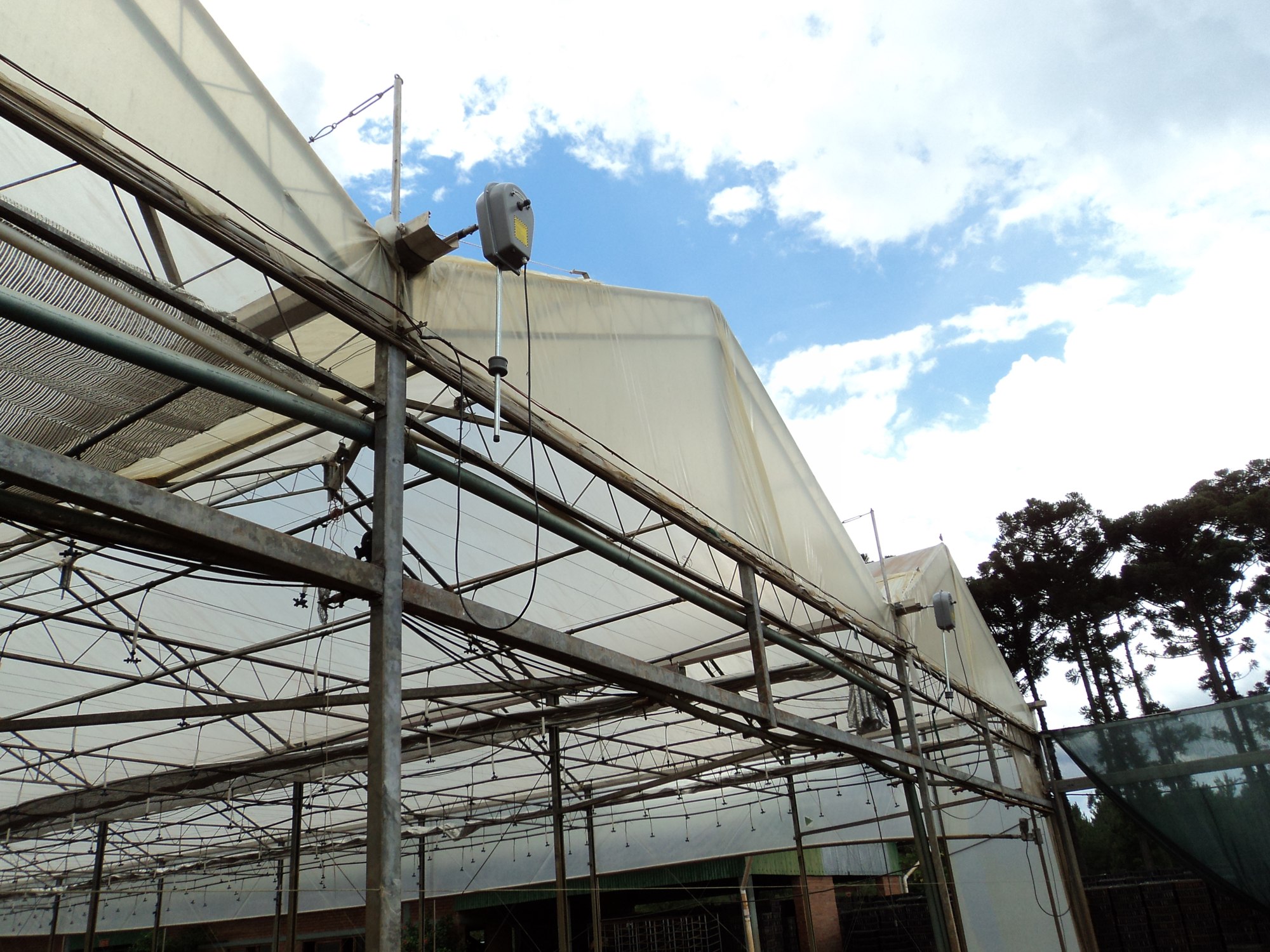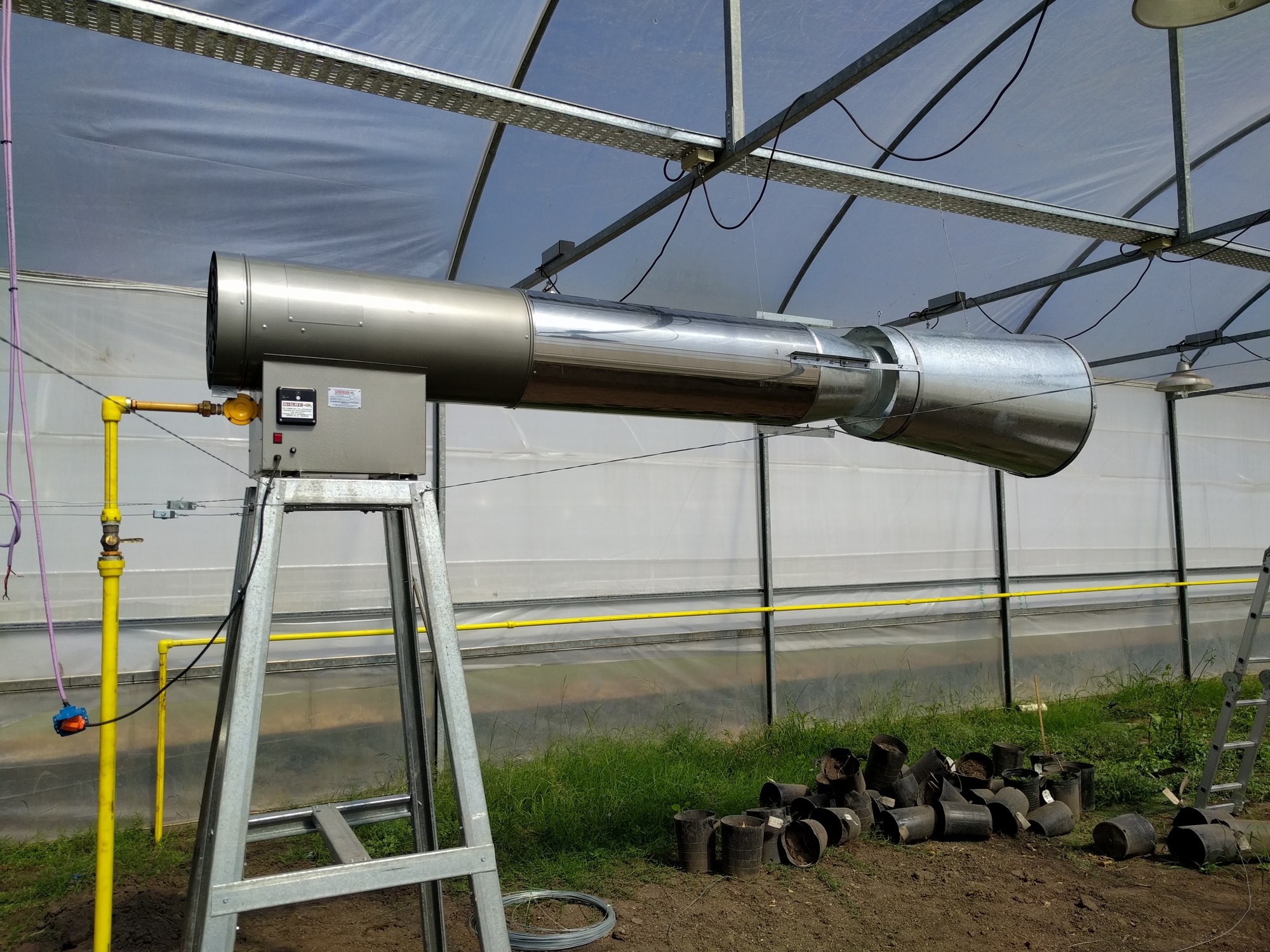
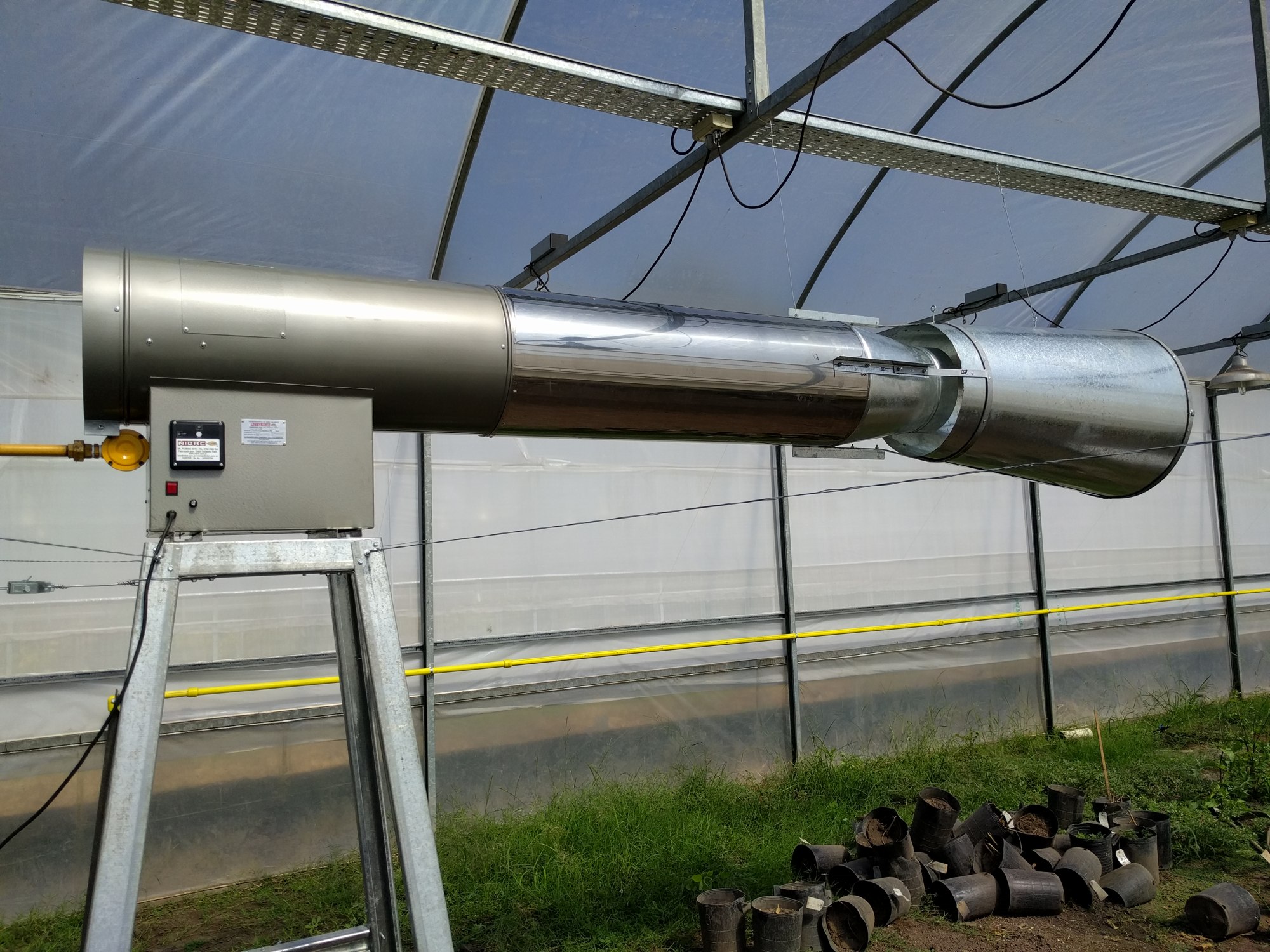
Heat must reach the crop evenly. We assess thermal demand, energy sources and distribution to maintain required conditions during cold periods. Heating is coordinated with screens, ventilation and environmental-control setpoints.
Loading 3D view…
Better decisions. More value in every cycle.
How this equipment supports everyday crop management.
Greater crop continuity
Maintain the operating temperature on cold nights to reduce development interruptions associated with low temperatures.
Fewer cold spots
Heat distribution matched to the space helps reduce differences between sectors and support more even development.
Less wasted heat
Combine setpoints, thermal screens and ventilation to supply heat when needed and limit energy loss outdoors.
Heat where the crop needs it
Heating must meet the enclosure demand and distribute heat through production areas. Floor area, volume, covering, outside climate and target temperature inform capacity and distribution. Equipment selected without considering structural heat losses may be inadequate or operate inefficiently.
Energy source and heat distribution
Generation and distribution are selected for project resources and conditions. Equipment locations, pipe or air paths, maintenance access and safety requirements are reviewed. The aim is to deliver heat through a configuration that can be operated and maintained.
Retain heat before adding more
Thermal screens, vent closure and ventilation management all contribute to heat retention. Coordination helps avoid heating that is lost through conflicting operation. Indoor and outdoor measurements support setpoint, schedule and threshold adjustments based on the facility response.
Want to supply heat when your crop needs it?
Coordinate heating, ventilation and screens with targets, schedules and readings from your facility.
Automatic functions depend on the sensors, actuators and configuration of each project.
Explore integrated control with Gaia ↗Let’s bring your greenhouse project forward.
Tell us what you grow, where your facility is and what you want to improve. Let’s define the equipment and next step together.
Frequently asked questions
How is heating capacity determined?
Outdoor climate, target temperature, volume, covering and heat loss are considered. Capacity is calculated for the agreed design conditions.
Which energy source is used?
The option is selected according to local availability, operating costs, heat distribution and facility requirements.
How are cold spots limited?
Distribution, placement and circulation are designed alongside heat generation. Sector readings help assess actual differences.
Can heating work with thermal screens?
Yes. Coordinating heating, screens and ventilation helps retain heat and avoid wasteful actions.
When does heating start and how is it supervised?
The controller uses agreed setpoints and sensors. Commissioning includes equipment checks, priorities and review procedures.