


Protect crops from cold with correctly sized greenhouse heating
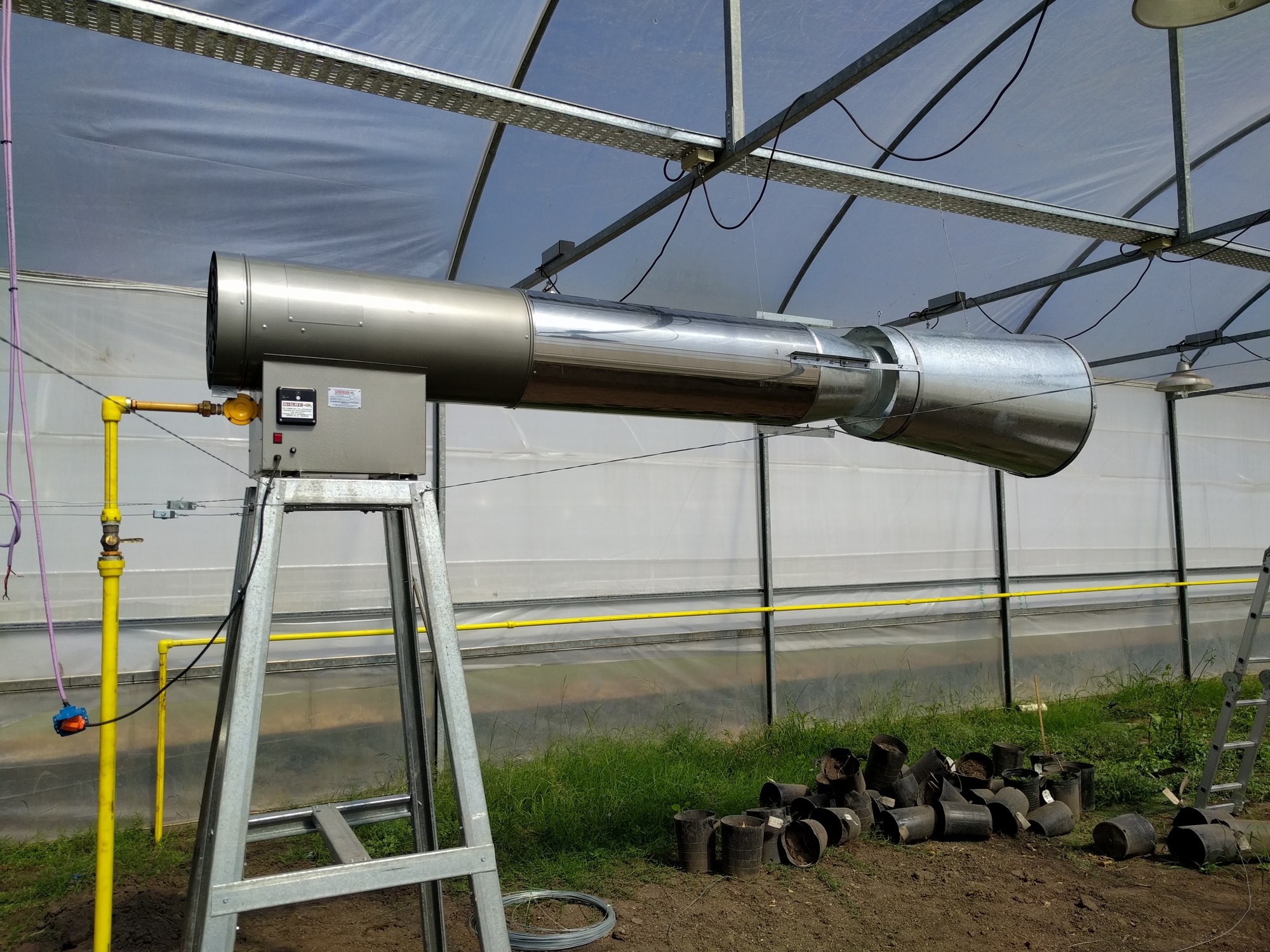
Greenhouse heating is sized from crop temperature requirements, outdoor design conditions and structural heat losses. Floor area is insufficient for choosing capacity. Heat distribution and control also matter.
An installation may have enough capacity yet retain cold sectors because heat does not reach them adequately. Avoidable losses may also increase consumption. The first question is therefore not simply which heater to buy, but which condition the project must maintain and under what climatic scenario.
Define the objective before calculating capacity
Protecting against a single frost event and maintaining production temperature are different objectives. A research centre may additionally require stage-specific or treatment-specific programmes. Each objective changes sizing and operating criteria.
The assessment must document location, required indoor temperature, outdoor design conditions, dimensions and materials. It should also cover energy availability, intended operation and consequences of interruption. These details allow alternatives to be compared on a common basis.
Where heat is lost
An estimate of losses through the envelope uses:
Thermal power = U × A × ΔT
Here, U is the thermal transmittance of the construction, in W/(m²·K); A is exposed surface area, in m²; and ΔT is the indoor–outdoor temperature difference, in K. The result is expressed in W.
The full calculation must also consider air-infiltration losses and other project-relevant terms. Texas A&M describes covering area and materials, temperature difference and infiltration separately when estimating demand. Texas A&M, Greenhouse Heating Requirements.
Hypothetical example: if U and A stay constant, increasing the temperature difference from 10 to 20 K doubles U × A × ΔT. This does not automatically double the annual bill: consumption also depends on operating hours, efficiency and other losses. It illustrates why required temperature must be explicit before quotation.
Distribute heat to the crop
Air heating needs a distribution strategy. Water-based heating uses a different configuration for generation and delivery. The choice depends on scale, zoning, installation and objectives.
UMass Extension identifies uniform heat distribution as a central design challenge. It describes air circulation, perforated ducts and water circuits, with different zoning and delivery options. No solution is superior for every project. UMass Extension, Greenhouse Heat Distribution.
During commissioning, check temperatures at several points and times, particularly in sectors identified as critical. This allows equipment location and control criteria to be reviewed.
Retaining heat is part of the system
Repairing seals, checking openings and maintaining the covering are related to heating. Thermal screens may form part of the strategy, provided installation and management are considered.
UMass energy-conservation guidance recommends reviewing air leakage, enclosures and thermal curtains. Economic evaluation should use the current project’s climate, tariffs and conditions. UMass Extension, Energy.
Assess results with comparable information
To verify performance, record hours within the defined range, sector minima, spatial differences and energy consumption. Interpret results alongside outdoor climate and setpoints. Comparing two winters solely through total billed costs can lead to incorrect conclusions.
CiberAgro integrates sizing and installation with intended management. Where a project includes Sinthesis, rules and monitoring can be configured for the equipment and sensors installed. Heating, screens and ventilation sequences must follow crop technical criteria; eliminating all ventilation is not an appropriate objective by itself.
Let’s assess the heating your greenhouse needs.
Frequently asked questions
Can I choose a heater using square metres alone?
Not with sufficient accuracy. Geometry, covering, air losses and the difference between required indoor and outdoor design temperatures are needed.
Does a thermal screen replace heating?
Not necessarily. It can reduce losses, but the need for heat depends on climate, structure and target temperature.
How should two heating quotations be compared?
Verify that both use the same design temperatures, materials and assumptions. Compare useful heat capacity, distribution, control, installation and operating conditions as well as equipment price.
Apply these criteria: explore heating and thermal screens. Discuss your project.
Sources and scope of evidence
- Texas A&M, Greenhouse Heating Requirements: transmission, area and infiltration losses; the formula is expressed here in SI units.
- UMass, Greenhouse Heat Distribution: heat-distribution options.
- UMass, Energy: heat conservation; historical financial figures are not extrapolated.