


Greenhouse monitoring: measure to improve management
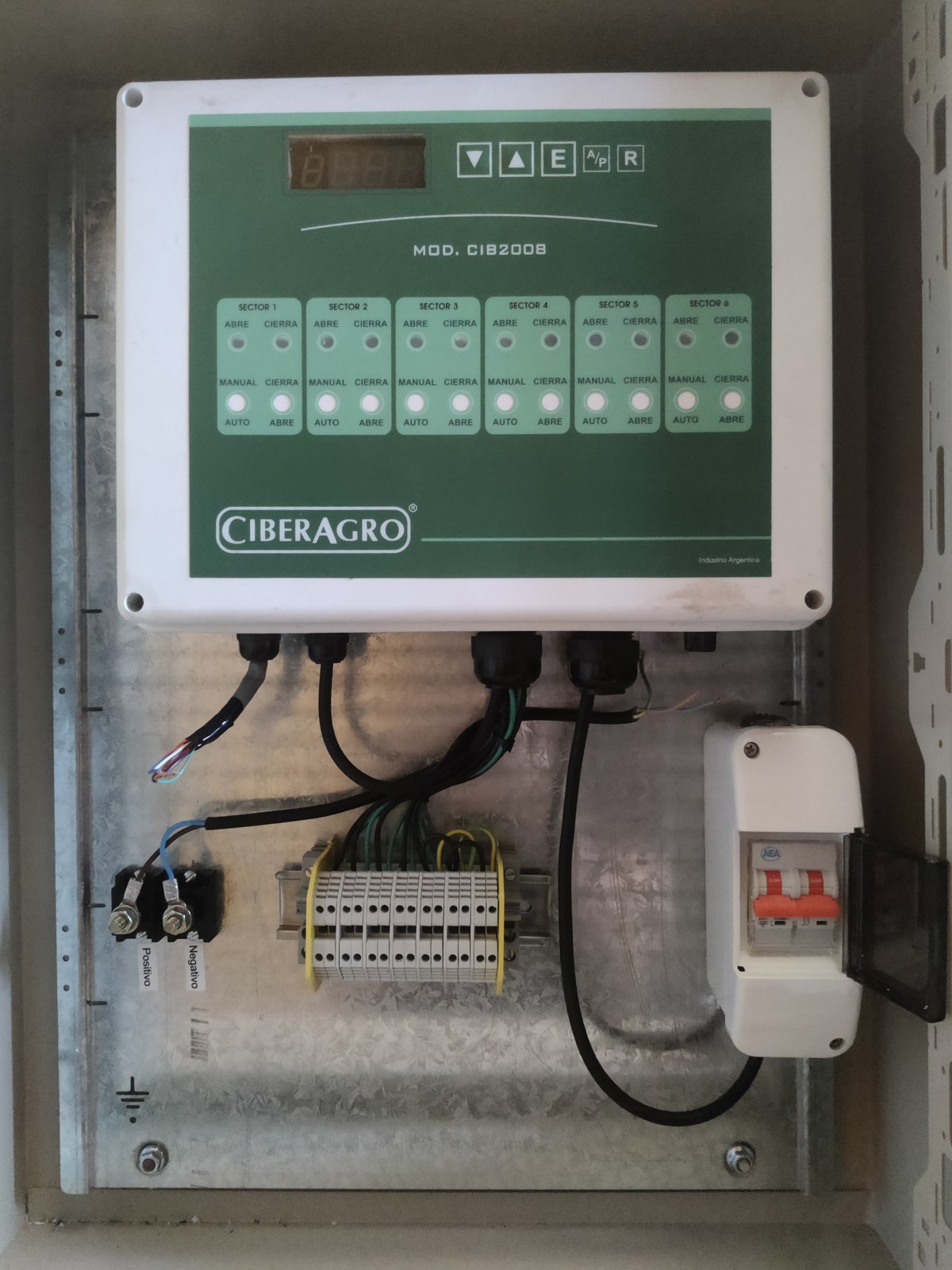
What is not measured cannot be improved. In a greenhouse, monitoring reveals what happens between inspections and allows conditions in different sectors to be compared. Installing sensors is only one part: decisions are also needed about what to measure, where and how records will inform action.
An isolated reading may show normal conditions while hiding several hours outside the expected range. Conversely, an extreme value may come from a badly positioned sensor. The value of greenhouse monitoring depends on data quality and context.
Start with the decision you need to make
Before listing sensors, write down the problem: are sectors behaving differently, is irrigation always adjusted by perception, are night temperatures unknown, or must an experimental treatment be documented?
Associate each variable with a decision and a responsible person. If substrate moisture is measured, it should be clear who reviews the reading and which criterion guides adjustments. If light is recorded, determine whether the aim is comparing sectors, reviewing a screen or assessing supplemental lighting.
IFAPA’s technical report on climate sensors presents measurement as a tool for understanding growth and development factors, together with usage recommendations. IFAPA, Uso de Sensores de Clima en Cultivos bajo Invernadero.
What to observe in air, roots and water
Air and light. Temperature and relative humidity characterise the environment. Radiation requires choosing an appropriate quantity: a quantum sensor measures photon flux for photosynthetic-light assessment, whereas a pyranometer measures solar energy. Units and purposes are not interchangeable. Both and colleagues distinguish these instruments and explain how installation affects readings. Both et al., 2015, Plant Methods.
Soil or substrate. Moisture readings must be interpreted for the medium and sensor type. University of Minnesota guidance distinguishes volumetric-content and tension sensors and notes that some technologies need specific calibration. It mainly concerns field soils: its thresholds should not be transferred directly to pots or horticultural substrates. University of Minnesota Extension, Soil moisture sensors for irrigation scheduling.
Water and irrigation solution. In hydroponics, observing supply and drainage pH and electrical conductivity helps follow solution management. NSW DPIRD includes these variables in its monitoring recommendations. Equipment and sampling-point selection depend on the installed system. NSW DPIRD.
A sensor must represent the location being assessed
Draw a map before installation: irrigation sectors, exposure differences, airflow routes and areas where problems have appeared. This helps determine whether one point is representative or several locations need comparison.
The importance of distribution appears in a 2026 study involving two tomato varieties during spring–summer in a low-automation greenhouse in a Mediterranean climate. Thermal maps showed spatial differences reaching 8°C under above-average radiation. This is a result from that case, not an expected difference in every facility; it illustrates why measurement-point representativeness should be checked. Caposciutti et al., Thermal Science and Engineering Progress.
There is no universal sensor count per unit area. A small greenhouse with different treatments may need more points than a larger homogeneous one. Measuring average conditions, locating differences and verifying experiments are different objectives.
For research, Both and colleagues recommend documenting instruments, calibration and measurement conditions, and considering measurements independent of those used for control. The purpose is to support evaluation and reproducibility. Greenhouse measurement guidelines.
Data quality must be maintained during operation
A University of Arizona guide identifies displacement, dirt, corrosion, power and connectivity problems among causes of unreliable readings. The practical recommendation is to treat installation and maintenance as parts of the measurement system. University of Arizona Cooperative Extension, sensor maintenance and calibration guide, 2026.
Identify each sensor, record its location, assign inspection responsibility and distinguish recent readings from data that stopped updating. When a reading is implausible, check the instrument and context before changing management.
The history should also record when a setpoint changes, a sensor moves or equipment is serviced. These notes prevent attributing installation-related changes to the crop.
Recognising a measurable benefit
The first result may be operational: detecting a sector difference, identifying a problematic time window or reducing time spent reconstructing events. Record time to detect deviations, data availability and decisions made from readings.
Production impact needs an additional comparison. If lot uniformity improves, variety, date, nutrition and other changes must also be considered. A sensor supplies evidence for analysis; it does not independently establish the cause of improvement.
CiberAgro defines measurement points and integration with the facility. Sinthesis provides tools to record, visualise and analyse conditions and, where included in the project, link them to control. Scope is selected for the crop and decisions needing support.
Explore environmental monitoring and greenhouse control.
Let’s define what you need to measure. Share crop, area, sectors and the problem you want to understand.
Frequently asked questions
Can I start by measuring without automation?
Yes. Monitoring can support manual decisions and help identify which process to automate later. Measurement and actuation are different scopes.
Does one moisture sensor suit every soil or substrate?
Not necessarily. Compatibility, measurement method, calibration and installation must be checked. The same reading does not indicate identical water availability in every medium.
Do more sensors always mean better decisions?
No. Points should answer a question and provide representative data. A well-positioned, maintained network is preferable to many difficult-to-interpret readings.
Sources and scope of evidence
- IFAPA, 2020: climate-sensor purposes and principles; institutional record consulted.
- Both et al., 2015: instruments, documentation and experimental comparability.
- University of Minnesota Extension: moisture technologies; field thresholds are not transferred to substrates.
- NSW DPIRD: hydroponic-monitoring variables.
- University of Arizona, 2026: maintenance and error sources, not a percentage saving for CiberAgro.
- Caposciutti et al., 2026, DOI 10.1016/j.tsep.2026.104629: editorial abstract consulted; spatial temperature variability in a Mediterranean experimental case, not a commercial sensor effect.