


Integrated control: coordinate greenhouse management
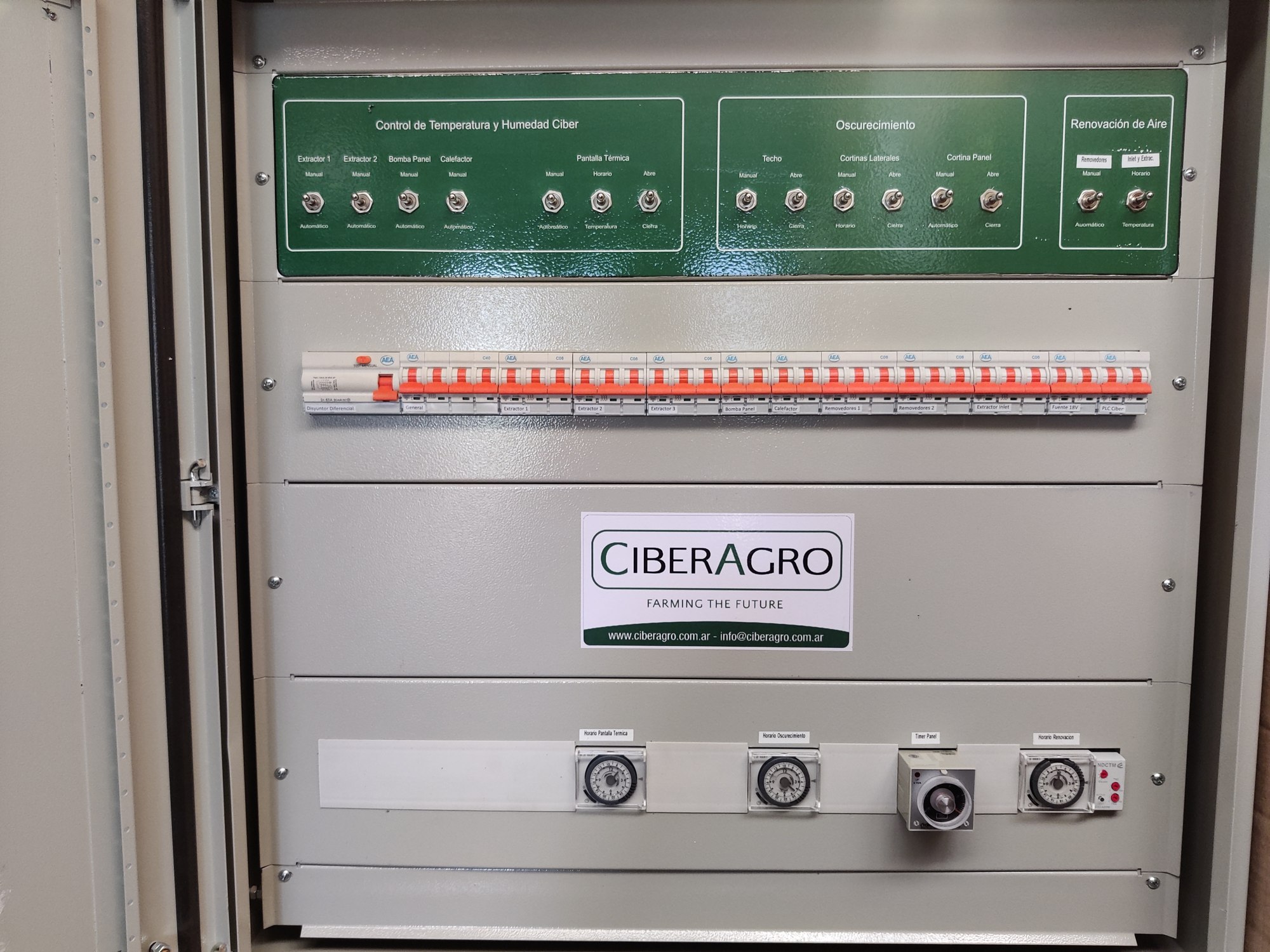
Integrated greenhouse control coordinates equipment using measured conditions and the programme defined by the technical team. Its value lies in executing decisions consistently: when to ventilate, which sector to irrigate, how long to maintain a lighting programme or under what conditions to close a screen.
This requires defining crop priorities, checking equipment capacity and turning those criteria into verifiable rules. More sensors or more automated functions do not resolve that work by themselves.
A shared environment needs coordinated decisions
Heating, ventilation, screens and lighting change the same environment. University of Alaska extension guidance describes this interaction and notes that coordinated control reduces the need for continuous manual adjustments. It also reminds readers that sensor placement affects system decisions. University of Alaska Fairbanks, Controlling the Greenhouse Environment.
A project should therefore start with a description of expected operation. If the objective is retaining heat at night, how will a simultaneous need to remove humidity be handled? If a sector requires darkness, which equipment can operate without changing that treatment? These questions define priorities before programming.
Coordination does not mean preventing all simultaneous operation. Some strategies require heating and air renewal together. Such combinations should address a defined need, have limits and be reviewable.
From an isolated signal to a compound rule
A thermostat can trigger an action when temperature crosses a threshold. Compound control combines conditions through logical operators such as AND and OR and establishes different programmes by time of day.
Consider a conceptual irrigation example: within a morning window, enable an application if substrate readings fall below the value set by the technical lead. Use another criterion in the afternoon and a specific night programme. Values must suit the crop and be checked at the facility. This explains a logic, not a universal agronomic recipe.
Context also includes information not supplied by sensors: crop stage, experimental treatment, production objective and calendar. The technical team can incorporate it through programmes and setpoints. This differs from claiming that a system automatically recognises phenology or independently decides crop management.
What an integrated-control project should specify
The proposal should clarify five issues:
- What is measured. Variable, location, recording frequency and reading-validity criteria.
- What is controlled. Equipment, sector and available operation: switching, opening, modulation or another compatible action.
- What takes priority. How simultaneous commands and treatment limits are resolved.
- How the response is checked. Which reading, status signal or inspection confirms execution.
- What happens during an incident. Behaviour when data is lost, power fails or manual operation is required.
These are proposed acceptance criteria. They should not be assumed included without checking hardware and contractual scope. Sending a command to a pump, for example, does not prove water flowed; confirmation needs additional instrumentation or verification.
NSW DPIRD describes sensors and computers working together to adjust equipment and considers alarms and backup power according to facility risk. This supports integration design, rather than guaranteeing an economic return for every project. NSW DPIRD, Computer control systems, sensors and monitoring equipment in greenhouses.
Assess whether automation adds value
Before changing management, record a baseline: time outside agreed ranges, manual interventions per shift, measured consumption and programme compliance. After commissioning, these indicators support performance review.
A useful comparison considers outdoor climate, crop stage and occupancy changes. Lower consumption during a warmer week does not itself demonstrate control-related savings. Research also needs records of what actually happened during treatment, beyond programmed setpoints.
One assessment format compares hours within range, intervention counts and consumption per unit area over equivalent periods. If one indicator improves while another worsens, priorities should be reviewed: saving energy while failing the treatment does not meet the project objective. Expected results should be documented before testing.
CiberAgro’s approach
CiberAgro develops engineering and integrates facility equipment. Sinthesis provides measurement, analysis and advanced control, including combinations of conditions to define control flows. Sensors, modules, inputs and outputs are selected for each project.
We can begin with a bounded process and expand integration once operation has been validated. Scope should include configuration, testing and operating criteria as well as the equipment list.
Explore climate controllers, the monitoring foundation and our integration projects.
Tell us which process you need to automate. For an initial assessment, provide crop, sectors, existing equipment and the decision currently requiring most attention.
Frequently asked questions
Does integrated control require replacing all equipment?
Not necessarily. Electrical compatibility, available signals, equipment condition and integration cost must be checked first. Retaining equipment may be worthwhile but is not always simplest.
Are automation and autonomous AI control the same?
No. Automation can execute human-defined rules and programmes. Autonomy introduces other decision-making capabilities that must be demonstrated and validated separately.
Can we start with one sector?
Yes, if architecture and installation allow it to be delimited. This can verify the process and define expansion to other sectors.
Sources and scope of evidence
- University of Alaska Fairbanks: environmental interactions and control principles, not CiberAgro results.
- NSW DPIRD: sensors, automation and contingencies; its general payback assertion is not adopted here.