


Photoperiod control: programme light and darkness for your crop
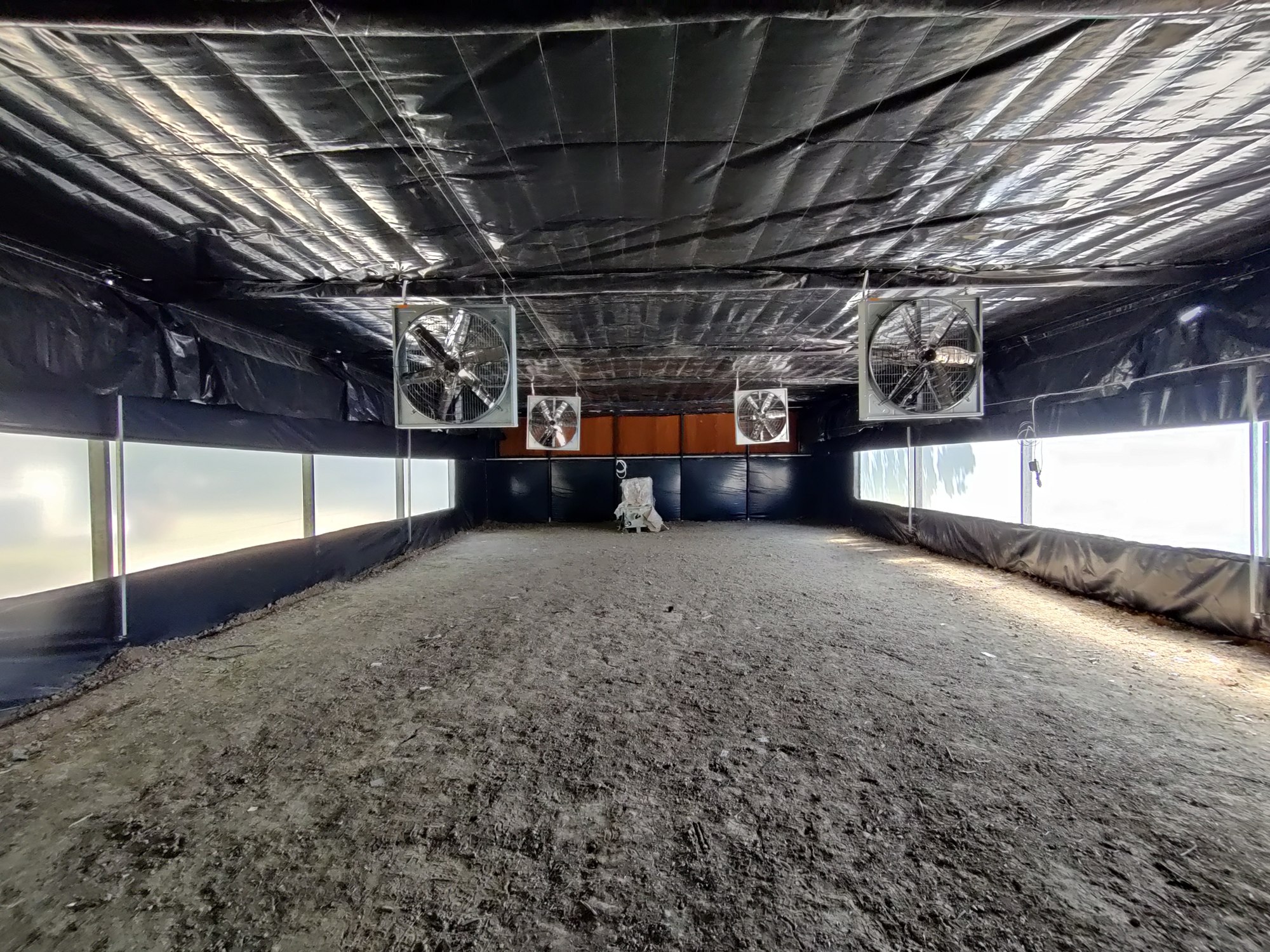
Controlling photoperiod means regulating the duration of light and darkness perceived by plants. Blackout screens shorten the day; photoperiod lighting extends it or interrupts the night. Programmes must match the species, variety and crop objective.
Photoperiod is the duration of the light period perceived by a plant within the daily cycle. In sensitive species, changing this signal can influence flowering and other developmental processes. The system must deliver a defined environmental condition, rather than simply follow a schedule on a control screen.
Species, variety and crop stage determine an appropriate programme. A recipe suitable for a chrysanthemum should not automatically be applied to research material or another ornamental species. University of Florida: photoperiod and plant response.
Day length and light quantity are different variables
A crop can receive a few hours of intense light or many hours of dim light. Despite different day lengths, accumulated photons could be similar. Photoperiod describes duration; daily light integral, or DLI, describes the amount of photosynthetically active radiation received during the day.
Photoperiod lighting aims to trigger a developmental signal and uses much lower intensities than lighting intended to supply energy for photosynthesis. Confusing these functions can lead to buying equipment that changes day length without resolving insufficient growth light. Roberto Lopez: photoperiod and supplemental lighting.
What a blackout screen provides
A blackout screen excludes light during part of the natural day. In short-day plants it can provide sufficiently long nights; in other applications it helps define experimental treatments. Some plants respond to low light levels, so gaps, side openings and external lights can alter the intended condition. Michigan State University: Controlling photoperiod.
Closure inspection should form part of commissioning. Check joints, sidewalls, doors, areas near lights and behaviour during operational openings. For experimental treatments, document exceptions too: night access, manual movements and power failures.
Temperature also changes the result
Meeting darkness hours is insufficient. Controlled research in chrysanthemum shows that heat sensitivity changes during the daily cycle and is related to transitions between light and darkness. This supports studying photoperiod and temperature together, without extrapolating the response to all species. Nakano and colleagues, The Horticulture Journal, 2020.
Closing a screen while solar load remains can also raise temperatures below it. MSU warns about this effect and describes scheduling alternatives to avoid heat accumulation in blackout programmes. The strategy must respect both the required dark period and the facility’s ventilation capacity. MSU: photoperiod control and temperature beneath screens.
What to define before automating
To turn an agronomic requirement into an executable programme, prepare a crop or treatment record containing five details: material identification, stage, programme objective, daily sequence and acceptable tolerances. Then define the equipment and operating conditions needed to achieve it.
In a research centre, identifying who approved the programme and its effective date is also useful. When comparing responses between lots, this allows the intended conditions to be checked against what actually happened. Operational traceability is a proposed working method: it does not replace experimental design or independently demonstrate biological causality.
Measuring the installation’s contribution
Separate technical compliance from plant response. The first includes executed schedules, movement failures, light leakage and temperature during darkness. The second includes production or experimental variables: flowering date, plant uniformity and final quality.
If the aim was to reduce differences between lots, compare their dispersion rather than only average dates. If the aim was to maintain a treatment, verify consistency. Automation’s benefit becomes demonstrable when records answer a specific question.
CiberAgro integrates blackout screens and environmental equipment according to each project. Coordinating lighting, ventilation and control turns the technical team’s protocol into a verifiable operating sequence.
Tell us which species or material you work with, the response you seek and the season: we can assess the installation your photoperiod programme needs.
Frequently asked questions
Can blackout accelerate flowering in any crop?
No. Response depends on species, variety, stage and other environmental conditions.
Is a thermal screen enough to control photoperiod?
Not because of its thermal properties alone. It needs light-exclusion performance and closure suited to the objective.
Do more light hours mean a higher DLI?
Only if intensity is also known. DLI integrates intensity and time; lighting hours alone are insufficient.
Apply these criteria: explore blackout screens and their relationship with lighting. Discuss your project.
Sources and scope of evidence
- University of Florida, Photoperiod: concept and variability of response.
- Lopez, Basics & Beyond Lighting, 2013: photoperiod versus supplemental light.
- Runkle, Controlling Photoperiod: exclusion, light leakage and heat management.
- Nakano et al., The Horticulture Journal, 2020: temperature and daily-cycle research in chrysanthemum; not transferable to other species without assessment.