


Thermal-reflective screens: retain heat without losing sight of light
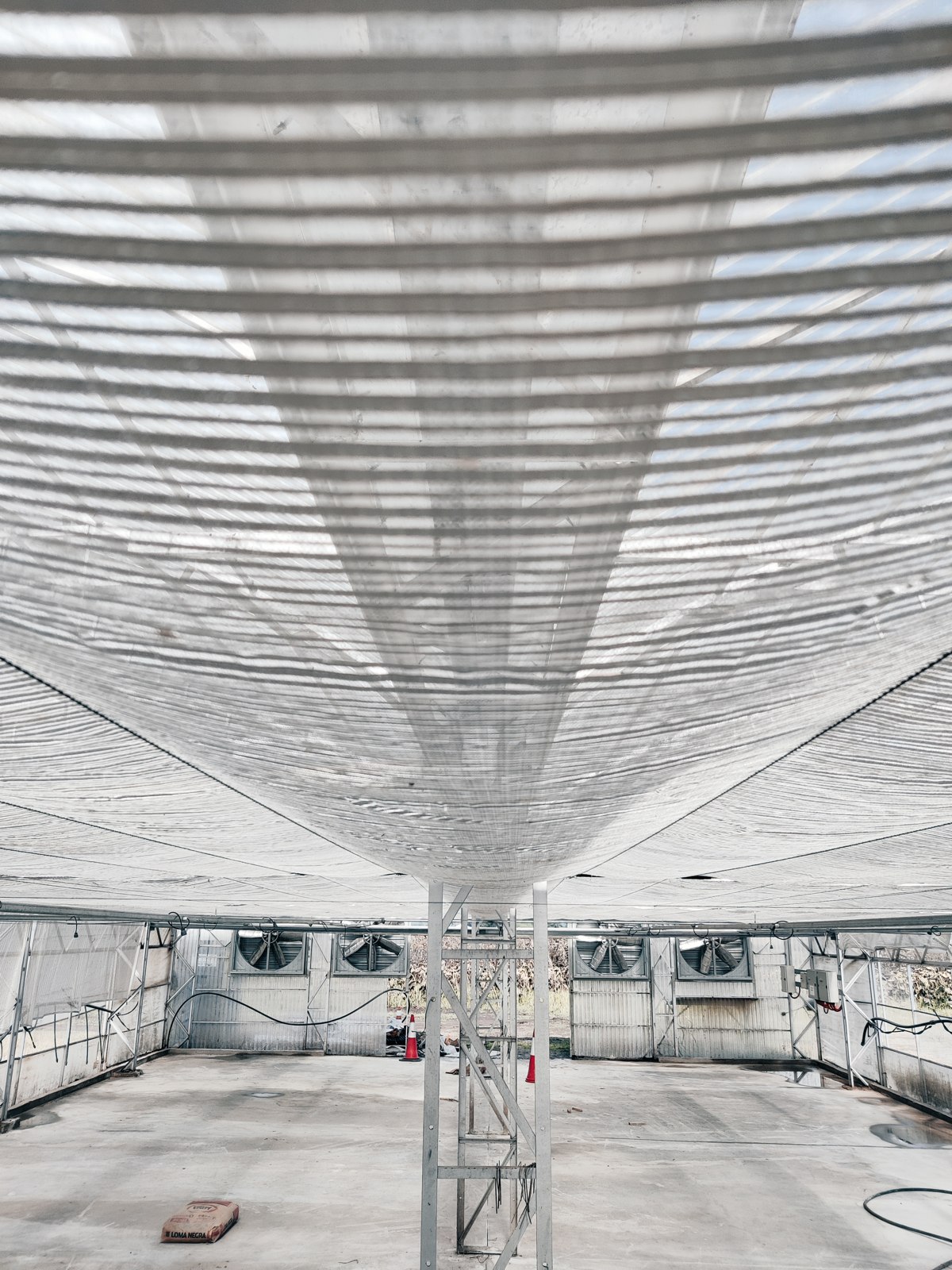
A thermal-reflective screen reduces heat exchange between the crop and the greenhouse covering and can limit daytime solar radiation. Its performance depends on the fabric, seals, climate and humidity management. It does not automatically replace heating or a blackout screen.
A thermal screen addresses part of the greenhouse energy balance: how much heat is lost and how much radiation reaches the crop. Selecting it solely by its shading percentage overlooks important factors. The same fabric that helps retain heat can change light transmission and moisture exchange.
Before deciding whether a screen is appropriate, define the problem: reducing heating demand, moderating solar load, improving night-time conditions or combining objectives. Each application requires an assessment of the material and its operation.
What a thermal-reflective screen does
Energy screens affect radiative and convective exchange between the crop zone and the upper greenhouse. Reflective properties also contribute when fabrics contain aluminium. Air and water-vapour permeability influence performance: screens that look similar do not necessarily provide the same insulation. Wageningen University & Research: Wet Screens.
Shade, thermal and blackout screens have different functions, although some materials combine properties. A project should specify light transmission, thermal properties and installation conditions; the commercial name alone is insufficient. WUR: screen applications.
What the evidence says about savings
A Wageningen study published in Acta Horticulturae in 2025, based on material measurements and annual dynamic calculations for Dutch greenhouse conditions, reports typical energy savings of around 25–30% for one screen compared with an unscreened tomato scenario. Results also vary with material properties and humidity strategy. This demonstrates potential under the studied conditions, not a percentage transferable to any Argentine installation. Hemming and colleagues: Quantifying energy saving by screens.
For a local project, we propose comparing energy use, operating hours and indoor conditions before and after the intervention. Outdoor temperature and setpoints must be considered: a milder winter can reduce consumption without greenhouse modifications. A reduction in heating demand should not be confused with the same percentage reduction in the total energy bill.
What to check before choosing the fabric
Selection should answer at least four questions:
- What light does the crop need during the season when the screen will be used?
- Which heat losses should be reduced, and for how many hours?
- How will moisture be removed while the screen is closed?
- What conflicts exist with vents, lights, pipes and the structure?
UMass Extension highlights perimeter seals, fabric openness and compatibility with ventilation. It also warns that excessive shading limits available light. These details make installation as important as purchasing the material. UMass: selecting energy and shade screens.
Coordinate the screen, humidity and heating
Retaining heat should not become a permanent command to keep the screen closed. The fabric changes exchange between the lower and upper air volumes, so operation must consider humidity as well as temperature. Wageningen research demonstrates this interaction between screen properties, moisture transport and energy balance. WUR: dry and wet screen properties.
As a project criterion, document when the screen closes, which conditions permit opening and how it coordinates with ventilation and heating. Recording position and checking that commands produce the expected movement are also useful. Programming without considering actual mechanical operation provides little information for improving management.
Assessing the impact at your facility
Monitoring can focus on three indicators: heating energy, time outside the defined temperature range and daily light received by the crop. Attributing production changes to a screen additionally requires records of variety, dates, density and management practices. Energy savings should be assessed alongside crop quality and development.
CiberAgro integrates screens with greenhouse structures and equipment. Assessment starts with intended use, location and current management to define the fabric, installation and automation required.
Considering a thermal screen? Share your location, dimensions, crop and heating system so we can assess where it may add value.
Frequently asked questions
Does a thermal screen replace heating?
Not necessarily. It reduces losses, but the need to supply heat depends on climate, structure and target temperature.
Can an aluminised screen provide blackout?
Only if the product is specified for that function and the installation provides the required closure. Reflectivity does not imply opacity.
How are savings verified?
By comparing consumption and operating conditions over equivalent periods, considering outdoor climate, setpoints and occupied area.
Apply these criteria: explore our thermal screens and their relationship with heating. Discuss your project.
Sources and scope of evidence
- WUR, Wet Screens: fabric properties and moisture exchange.
- WUR, screen applications: energy, shade and blackout functions; simulation setpoints are not recipes.
- Hemming et al., Acta Horticulturae, 2025: the 25–30% result concerns material measurements and annual tomato calculations; an institutional abstract, not a CiberAgro trial.
- UMass, Selecting an Energy/Shade Screen System: selection and installation; historical prices are not used.